
Essay with numbers · Published July 29, 2026
A season of sinking funds
Autumn bills, planned in summer—an essay about giving predictable surprises a quieter arrival.
Answer first: Beginning June 1, 2026, we set aside $286 each month for five autumn costs totaling $1,431. By September 1, the funds will hold $858; later contributions arrive before each bill. The plan does not lower a single price. It changes five abrupt withdrawals into a season of smaller, known ones.
Autumn has always arrived twice in my budget. First comes the pleasant version: windows open after heat, a jacket found at the back of a closet, earlier light on the kitchen table. Then the financial version follows—school supplies, insurance, travel, heating service and annual software renewals crowded into twelve weeks.
None of those bills is an emergency. Their dates move slightly, their prices change, and each still returns. On May 24, 2026, I listed everything expected between September 1 and November 30, then opened five sinking funds on June 1. A sinking fund is money accumulated gradually for a known future expense; our money glossary explains how it differs from emergency savings.
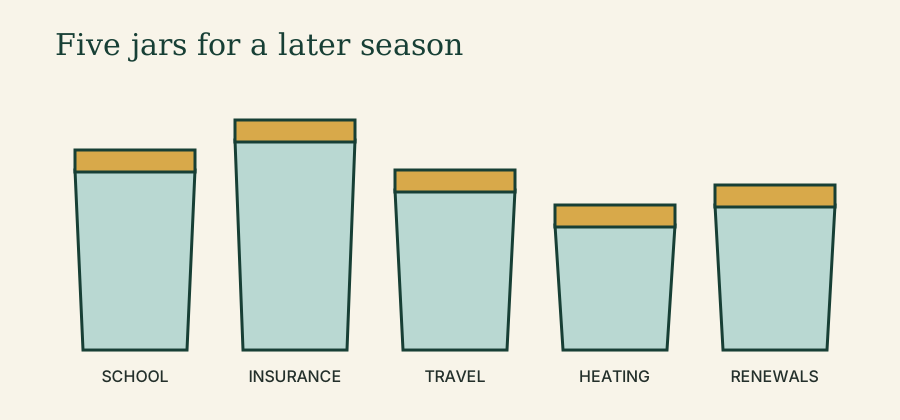
The list before the arithmetic
School and clothing received a $240 target due September 5. A six-month auto-insurance payment needed $486 by September 18. October travel required $320, heating service $165 by October 30, and annual digital renewals $220 by November 12. The full season totaled $1,431.
I checked 2025 receipts and added 6% to categories likely to rise. The insurance figure came from the current renewal notice, not an estimate. Travel received a ceiling rather than a prediction: if fares rose beyond $320, the trip would change. A target should sometimes limit the plan, not merely describe it.
| Fund | Due | Target | Monthly transfer |
|---|---|---|---|
| School and clothing | Sep. 5 | $240 | $80 × 3 |
| Auto insurance | Sep. 18 | $486 | $162 × 3 |
| October travel | Oct. 12 | $320 | $80 × 4 |
| Heating service | Oct. 30 | $165 | $33 × 5 |
| Annual renewals | Nov. 12 | $220 | $44 × 5 |
Summer carries the first weight
The June, July and August transfers total $286 a month. That is not light. We made room by pausing a $65 home project, redirecting $90 that had gone to a completed debt payment, setting a $75 ceiling on responsive spending and taking $56 from the general savings contribution. The plan rearranged existing cash flow; it did not pretend extra income would appear.
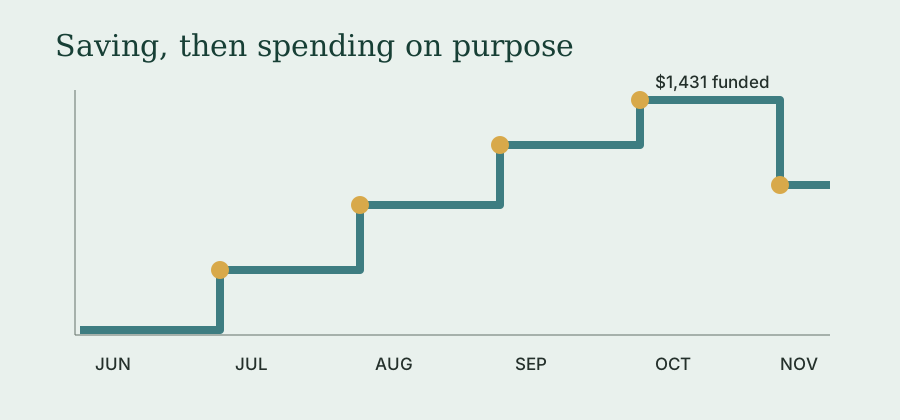
By July 29, two transfers had placed $572 in the five funds. On September 1, the balance will reach $858. The travel, heating and renewal funds continue after the first bills are paid. Separate due dates prevent the common mistake of dividing everything by the same number of months.
A sinking fund is a small claim on the present
There is a temptation to describe saved money as untouched. Sinking-fund money is already spoken for. The $162 moved toward insurance in June could not also repair the porch or soften a restaurant month. Naming that claim reduced the available number and made the coming bill feel ordinary.
This is the opposite of optimism, but it is not pessimism. It is seasonal memory. A useful budget remembers that October follows July. Our full-cycle Simplifi review shows how a forecast handles nearer bills; sinking funds extend the same attention farther downstream.
What happens when the estimate is wrong
School purchases may finish under $240. Any remainder will stay for winter clothing until December 1, then return to general savings. If heating service exceeds $165, up to $35 can come from home maintenance. Insurance is fixed. Travel cannot borrow from insurance because one is discretionary and the other keeps the car covered.
Those rules were written on June 1, before urgency could argue for itself. The point is not perfect forecasting; it is deciding where error will land. Without rules, every small overage quietly raids the same savings account.
When autumn finally comes
The funds will vanish one after another. That can look like lost progress in a net-worth graph, but spending saved money on its named purpose completes the plan. A sinking fund is not a museum for balances.
If five separate transfers feel fussy, use one “autumn” savings bucket and keep the subtargets on paper. If cash flow is tight, begin with the most fixed and consequential bill. Our budgeting app guide can help identify whether goals or cash-flow timing need software at all.
By November 12, the season will have cost exactly what it costs. What summer changed was the shape: $286, $286, $286, then smaller transfers, instead of five demands arriving as if the calendar had kept a secret.
The June transfer was automated one day after payday; the fund names remained visible in savings. Automation handled repetition, while the labels preserved purpose. We still reviewed balances on July 1 and August 1 because a successful transfer is useful only when checking can support it alongside rent and card payments.
Frequently asked questions
How much should go into a sinking fund each month?
Divide the target by the number of transfers before its due date. Our $486 September 18, 2026 insurance bill received three $162 transfers beginning June 1.
Where should sinking funds be kept?
Use a separate savings account or clearly labeled savings buckets where the money stays liquid and easy to identify. Avoid exposing near-term bill money to market swings.
What if a sinking-fund estimate is wrong?
Decide in advance where an overage comes from and where a remainder goes. We capped travel, gave heating a $35 backup, and returned unused seasonal money to savings after its purpose expired.