
Long-term review · Published August 5, 2026
One full billing cycle with Quicken Simplifi
An unhurried review of the alerts, corrections and small decisions that only appeared after setup day.
Answer first: After 37 days, Quicken Simplifi remained the budgeting app we most wanted to keep. Its projected cash flow prevented one poorly timed transfer, and weekly maintenance settled at seven minutes. Twelve early category corrections mattered, but the larger lesson was quieter: useful planning outlasted the pleasure of a clean dashboard.
We began this test on June 29, 2026, one day before a monthly salary deposit, and closed the notebook on August 4. The accounts were ordinary: two checking accounts, one savings account, three credit cards and a small brokerage account. The cycle included two paychecks, rent, an annual insurance premium, a dental bill, a reimbursement and 214 imported transactions.
This is a companion to our scored Quicken Simplifi review, but the question here is narrower. What happens after the accounts connect and the graphs stop feeling new? We recorded every correction and timed each maintenance session rather than judging the app by its first afternoon.
Week one: the plan needed an editor
Setup took 18 minutes. Simplifi found rent, utilities, subscriptions and both paychecks, then made two confident mistakes: it treated a transfer as income and interpreted an irregular insurance premium as monthly. Left alone, those errors inflated available spending by $610. Correcting them took nine minutes and changed the forecast immediately.
Twelve of the first 214 transactions needed a new category. Five were transfers, three carried vague payment-processor names, two combined pharmacy and groceries, and two were work expenses. The 94.4% first-pass rate was strong, but the errors were not equally harmless. A mislabeled $6 coffee barely moved the plan; false income did.
Week two: the forecast earned its place
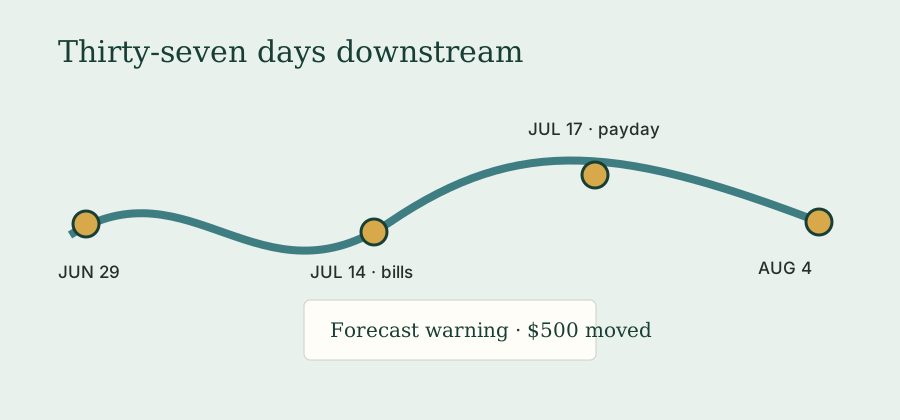
On July 11, projected cash flow showed the $486 insurance premium and a $1,142 card autopay reaching checking on July 14 and 15, two days before the second paycheck. The household had enough money overall, but not in that account at that moment. Moving $500 from savings on July 12 avoided a last-minute scramble.
The app did not discover money or make a sophisticated recommendation. It simply arranged known commitments in the right order. That modest function proved more useful than any spending pie. Readers weighing interfaces against planning can see the same distinction in our Simplifi and Copilot comparison.
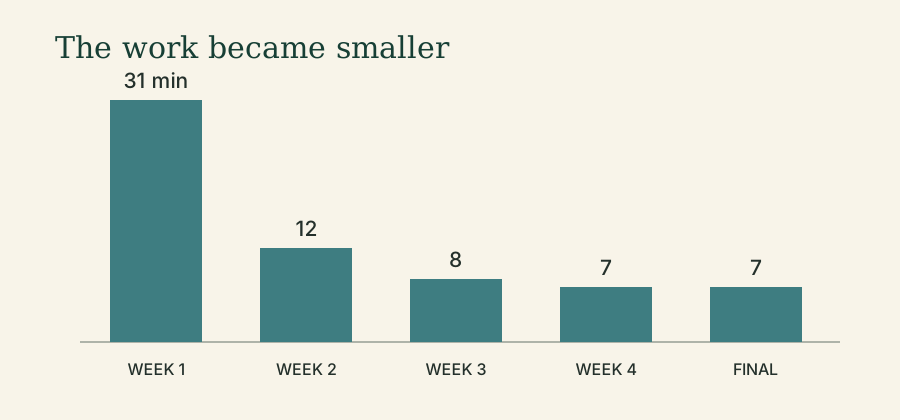
| Period | Imported items | Corrections | Maintenance |
|---|---|---|---|
| June 29–July 5 | 51 | 7 | 31 min |
| July 6–12 | 43 | 3 | 12 min |
| July 13–19 | 39 | 1 | 8 min |
| July 20–26 | 46 | 1 | 7 min |
| July 27–August 4 | 35 | 0 | 7 min |
Week three: less attention, better evidence
By July 20, we no longer opened Simplifi daily. That was not a failure. Checking on Monday and Friday caught new transactions, kept the plan accurate and made the forecast familiar enough to trust. One credit-union connection requested a new login; the repair took four minutes and produced no duplicate transactions.
Watchlists became more useful as novelty faded. A takeout watchlist reached $126 against a soft $140 guide, while reimbursements showed $184 still outstanding. Neither needed a full budget category. Both needed visibility. The distinction kept the plan from becoming a crowded collection of rules.
What survived the full cycle
The projected balance survived. So did the Spending Plan’s separation of bills, planned savings and flexible spending. Detailed reports mattered less than expected. Investment views were adequate for a household total and too thin for portfolio work. Mobile was best for corrections; the browser remained better for reorganizing categories.
The price remained part of the decision. On August 5, 2026, Simplifi showed a $2.99 monthly first-year rate billed annually at $35.88 and a stated regular rate of $5.99 monthly, also annual. We judge value at the $71.88 renewal, not at the promotional number. Seven weekly minutes and one avoided timing problem make that defensible, not automatic.
The unhurried verdict
Simplifi is best for someone who wants a forward view without running a strict zero-based budget. It is weaker for detailed investments, subscription refusal or people who only want a balance dashboard. The first week requires careful tuning; afterward, the app asks for less attention while retaining a useful memory of the month.
Our broader 2026 budgeting app ranking still places it first. This longer log explains why: not because every import was right, but because the app made one future problem visible and did not create five new chores in exchange.
One final note from August 5: the transaction total was less important than the distribution of repairs. Nine of twelve corrections occurred in the first seven days. A trial that ends before recurring rules settle may measure onboarding more than ownership. Anyone repeating our test should record when errors occur, not merely count them at the end.
Frequently asked questions
How long should I test Quicken Simplifi?
Use it through at least one complete billing cycle, including a payday, card payment and irregular bill. Our June 29–August 4, 2026 test needed a week of tuning before maintenance fell to seven minutes.
Does Simplifi need daily attention?
No. Daily checks helped during setup, but by week three a Monday-and-Friday review kept our plan accurate. A stable household may need only one short weekly session after rules and recurring items are corrected.
What was Simplifi’s most useful feature?
Projected cash flow was the clearest practical benefit. It exposed two large withdrawals arriving before a paycheck, allowing a planned $500 transfer instead of a hurried response.